Tool comparison · verified November 10, 2026
S-Docs vs. DocAI by TortScale
Generate, distribute, and sign documents from CRM data, including complex workflows. Compare the scope, pricing, HubSpot connection, and the other pieces required for the workflow you need.
 S-Docs
 DocAI by TortScale
Make the call
Choose the tool for the work you need done.
These products solve different jobs. Here is the practical trigger for keeping the other product, choosing DocAI, or using both.
Keep or choose S-Docs
Best when this is the main job
Teams that need CRM-driven generation, e-signature, or high-volume document operations and want a native HubSpot experience.
Choose DocAI
Best when the HubSpot record workflow is the gap
The requirement is ongoing management of files on HubSpot records, beyond generating and signing CRM-driven documents.
Use both
When the jobs complement each other
Keep S-Docs where its selected edition meets generation and signature needs; add DocAI only for lifecycle requirements that remain uncovered.
Price snapshot: Quote-based; Marketplace lists a Free Edition (confirm current limits). See source notes and dated terms below.
Product views
S-Docs and DocAI, side by side.
See the product interface, then compare the job each tool handles and the pieces still required around it.
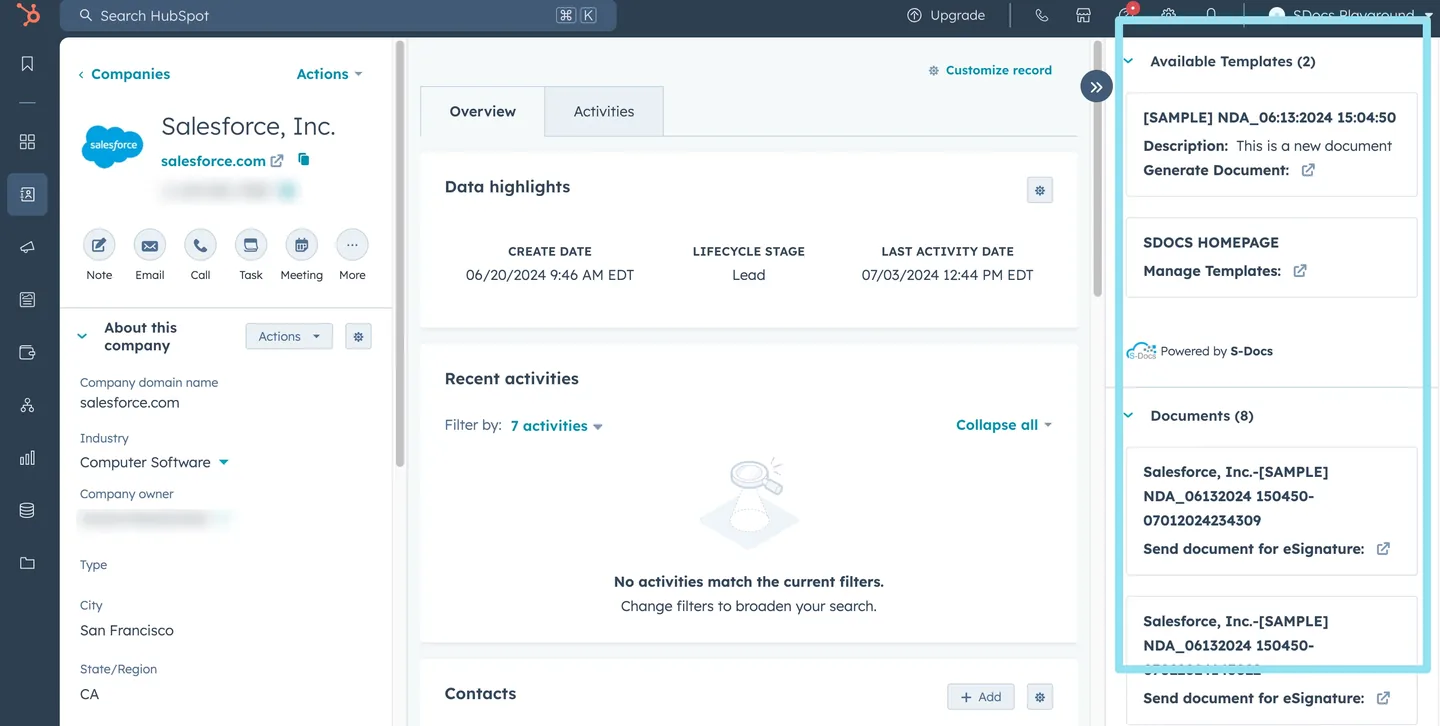
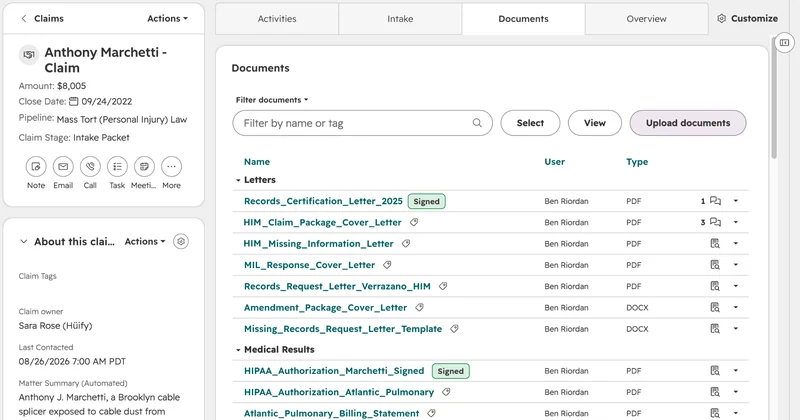
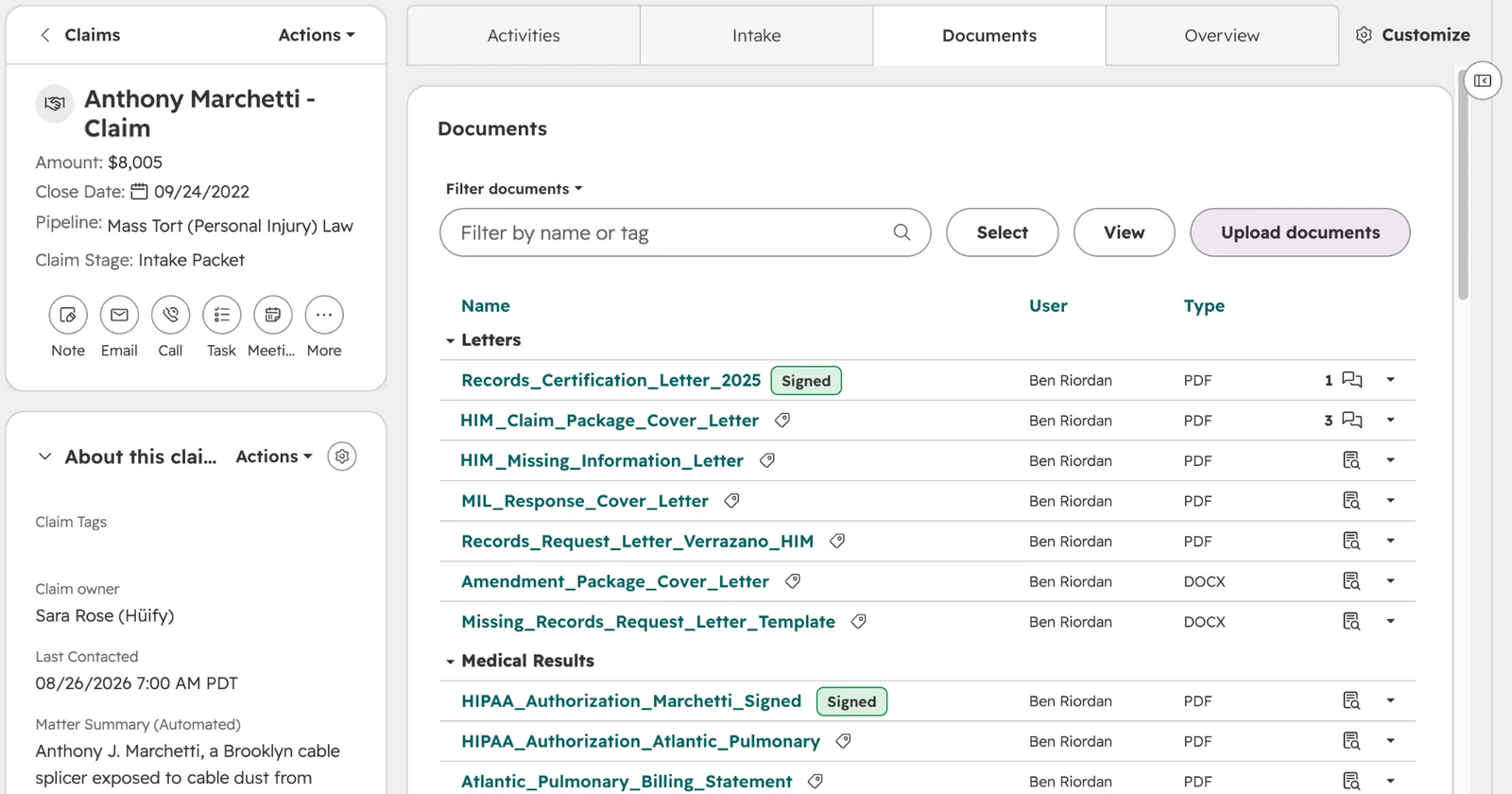
Product image: S-Docs HubSpot Marketplace listing source. Product marks come from the vendor site, HubSpot Marketplace, or Simple Icons. Logos and interface images identify the products being compared; marks remain the property of their owners.
Side-by-side
The overlap and the remaining work.
This comparison distinguishes storage, collection, generation, signing, and record-level document management rather than treating them as one category.
| Dimension | S-Docs | DocAI by TortScale · current scope |
|---|---|---|
| Primary job | Generate, distribute, and sign documents from CRM data, including complex workflows. | Manage documents on supported HubSpot records. |
| Published starting price | Quote-based; Marketplace lists a Free Edition (confirm current limits). | Essentials starts at $500/month; a $100 one-week trial starts after workflow scope is agreed. Plans are priced by document volume and service level. |
| HubSpot connection | HubSpot integration; marketplace listing describes document generation and e-signature. | Documents live in the context of HubSpot CRM records. |
| Record-level documents | Generated files and statuses can work with CRM records. | Contact, company, deal, and ticket document workspace. |
| Organize and control | Verify the chosen edition’s general internal DMS capabilities. | Categories/tags, bulk actions, roles/permissions, history, lifecycle actions, and stage requirements. |
| Client collection | Not the primary promise in public pricing page. | Internal document management; client-facing collection is not the current product scope. |
| Generate/sign | Core strength: generate, send, and sign documents from HubSpot data. | PandaDoc connection for completed documents; signature generation remains the signing provider’s job. |
| Document intelligence | Use the vendor’s current plan/product documentation; do not assume OCR or AI is included. | OCR, full-text search, cited answers, and agent tools are roadmap items, not available today. |
What you may need alongside it
The surrounding tool stack matters.
S-Docs is positioned around document automation and signatures. Compare its file-management, categories, record associations, permissions, and post-signing library workflow separately from its generation capabilities.
- HubSpot CRM
- S-Docs edition and any required seats/usage
- HubSpot data mappings and templates
- Signature and approval rules
- A separate document library only if the selected edition/process does not cover the required ongoing file workflow
Decision note: Keep S-Docs where its selected edition meets generation and signature needs; add DocAI only for lifecycle requirements that remain uncovered.
This is a planning list, not a statement that every deployment needs every item. Confirm security, retention, licensing, and HubSpot compatibility for the actual workflow. For storage products, confirm file migration, source of truth, and sync behavior; a comparison does not imply automatic storage sync unless a configured integration is specifically described.
Sources and pricing notes
Primary sources checked for this page.
Public plan prices can change, depend on billing term or region, and may exclude taxes, add-ons, implementation, or required HubSpot licenses.
S-Docs states that pricing is quote-based and tailored to document volume, user count, workflow, and CRM stack. Its HubSpot Marketplace listing includes a Free Edition; ask S-Docs to confirm current limits and paid tiers.
Research date: November 10, 2026. Where a vendor does not publish a current, comparable price, the page says so instead of estimating one.
Before you start
Common questions
Does S-Docs replace DocAI?
S-Docs is positioned around document automation and signatures. Compare its file-management, categories, record associations, permissions, and post-signing library workflow separately from its generation capabilities.
What does S-Docs cost?
S-Docs states that pricing is quote-based and tailored to document volume, user count, workflow, and CRM stack. Its HubSpot Marketplace listing includes a Free Edition; ask S-Docs to confirm current limits and paid tiers.
What else may a team need with S-Docs?
The required stack depends on storage, CRM record context, permissions, automation, external collection, and signing needs. See the tools-needed section on this page.
Start with one workflow
See the workflow on your HubSpot records.
Bring one real document process. We’ll map what DocAI handles, what stays in your existing tools, and what a complete setup requires.